
As physical therapist we see a lot of patients who live with chronic stress and as a result have pain. When you are in pain the hormone cortisol rises. The outcome of this is hormonal imbalances, weight- gain and…you guessed it, more pain. I had the opportunity to interview New York Times Best Selling author Dr. Sara Gottfried on the effects cortisol and what to do about it.
Joe Tatta, DPT: Dr. Gottfried, adrenal fatigue and cortisol imbalances are slowly gaining attention. Patients are beginning to ask, “should I test my cortisol?” We have lots of patients that are stressed, fatigued, painful and struggling with weight. What’s the best way to have your cortisol tested?”
Dr. Gottfried: As usual, the answer is: It depends. Cortisol is known as the “stress hormone” because stress triggers cortisol secretion from the adrenal glands. While normal amounts are key to stable blood sugar, blood pressure, and immune function, too much can poke holes in your gut and make you fat loss resistant.
In my new book, The Hormone Reset Diet, I created for you a cortisol reset that lasts only 3 days. It’s the fourth reset (out of a total of seven) designed to help you lose weight, fight fatigue and feel great fast. (If you want to order the book and get 7 awesome bonuses, including more details on my favorite health tests, click here.)
JT: Cortisol can be difficult to test and different physicians recommend different tests. Which test do you use with your patients?
Dr. G: I suggest a baseline lab test. When it comes to cortisol testing, here are the options:
- A cortisol test is done to measure the level of the hormone cortisol in the blood, which may indicate problems with the adrenal glands or pituitary gland. Ideally, perform the test around 8:00 a.m., and aim for the optimal range for adults of 10-15 mcg/dL. Perform this test with your health professional, or less ideally, order from a direct-to-consumer lab.[1] The advantage of blood testing is that it’s the universal language of conventional health professionals; the disadvantage is that it’s a 10-second snap shot of your stress level while the blooddraw needle is in your vein, and if you have a needle phobia, the measurement may be falsely elevated.
- There’s a diurnal pattern to your cortisol levels, which means you must be systematic about measuring your level at the same time over the next few months to years. Diurnal refers to a 24-hour period. Similar to how a flower opens its bloom in morning and closes in the evening, your cortisol rises after arising and should be at its lowest before bedtime. Measure your cortisol at four points during the day (also known as a four-point cortisol, usually before breakfast, lunch, dinner, and bedtime) to assess your cortisol slope. You can measure your cortisol in saliva at a number of direct-to-consumer labs.[2] The advantage to saliva is convenience, but the disadvantage is that most people vary a fair amount in their salivary cortisol level. Still, you can spot trends over time and I’ve found 4-point tests to be the most helpful of all the tests in my medical practice. Even though salivary cortisol is not readily accepted by mainstream medicine, there are thousands of studies demonstrating its utility clinically.[3]
- I like measuring the urinary metabolites of sex hormones because they give you a sense of the wear-and-tear from catabolic hormones like cortisol versus the growth-and-repair from anabolic hormones like DHEA and testosterone. My favorite is the “Complete Hormones” test, available from Genova.[4] Usually, this is a first morning urine (again, disadvantage is that it’s a quick snapshot) or a 24-hour collection (inconvenient, and averaged over your diurnal cycle, but can provide important assessment of your cortisol load in one day).
- I like the test from Accu-metrics[5] to measure the last 90 days of cortisol load, in your hair. This may predict cardiovascular risk, and it’s a reliable measure of your allostatic load – or your ability to roll with the punches (I’m always moderately stressed, according to the test. Go figure!).
JT: Do women struggle more with cortisol function than men do?
Dr. G: We are learning more every day but women’s hormonal patterns are more complex. I can tell you my personal story related to stress and cortisol. When I was in my thirties, I worked at a local Health Maintenance Organization (HMO) as a mom to two young kids, and a wife to a green rock star who travelled frequently. As if this weren’t stressful enough, I struggled with low energy, belly fat, a nonexistent libido, and a less-than-sunny attitude. As you might imagine, this was a truly miserable experience, and my entire family suffered.
I was too young to feel like crap. Antidepressants didn’t seem like the right solution. I didn’t want to dampen my personality with drugs. I just wanted to feel more alive and charged.
I was lucky. Because of my medical training, I knew what to do. I formed a hypothesis: my hormones were off balance. In med school, I was taught that measuring hormone levels is a waste of time and money, because hormone levels vary too much. But when I thought about how we track hormones such as estrogen, progesterone, thyroid, and testosterone when women are trying to conceive or are in the early months of pregnancy, I wondered why those numbers would be important indications of a woman’s health in one situation but not another? Wouldn’t my hormone levels be as reliable an indicator of my health after my pregnancies as before them?
So I drew some blood and tested my blood-serum levels of thyroid, sex hormones including estrogen and progesterone, and cortisol, the main stress hormone. And I discovered what millions of other women face: my hormones were seriously off kilter. My blood cortisol was three times what it should have been! I was a frazzled new mom, harried wife, and busy doctor, with significant imbalances in my estrogen, progesterone, thyroid, and cortisol levels.
I fixed it in four weeks, but that’s a conversation for another time. The takeaway here is that I wouldn’t have known that cortisol was the main culprit if I didn’t measure it. You should measure your level too.
JT: If chronic stress or chronic pain is a problem and hormonal imbalances are suspected what should a patient do?
Dr. G: One of the most important aspects of your health is adrenal function. Your adrenals are the tiny little endocrine glands on top of your kidneys that secrete several stress hormones, including cortisol and DHEA.
If you suspect hormonal imbalance test your cortisol, using one of the four methods I’ve described. What you measure improves. Your adrenals may just be the most important aspect of your hormonal balance and overall vitality.
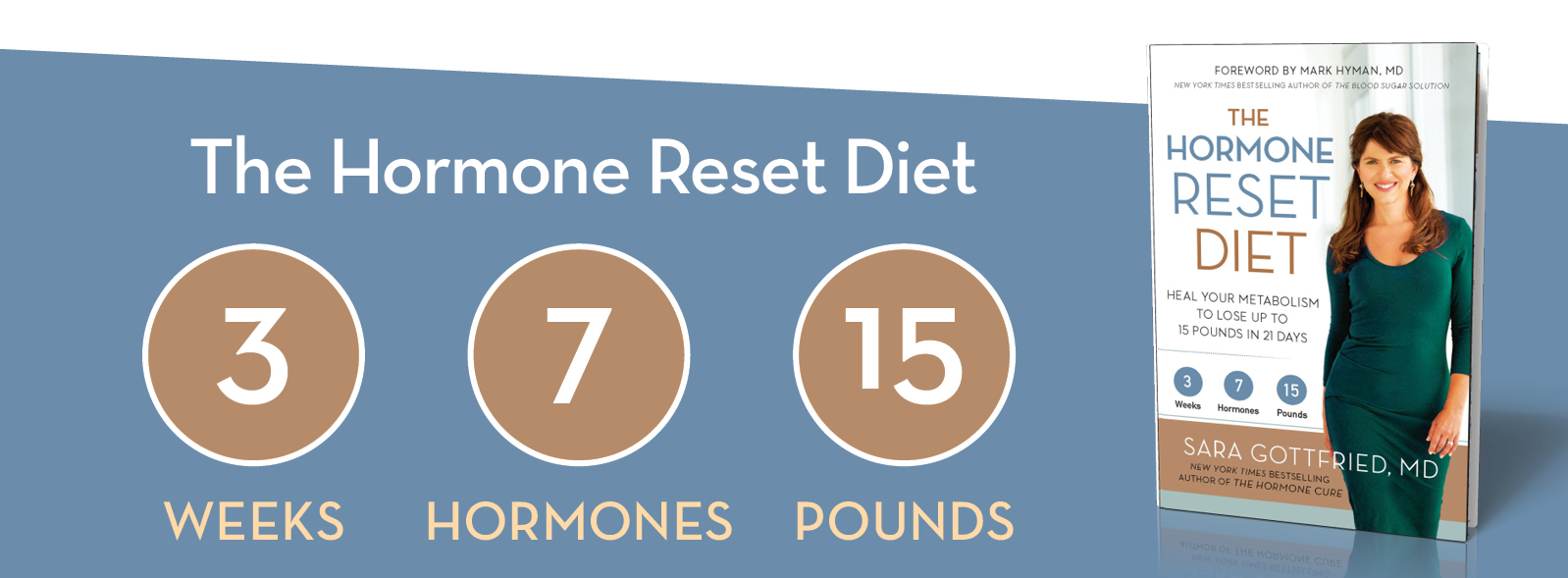
To learn more on how to reset your hormones, check out Dr. Sara Gottfried’s new book, The Hormone Reset Diet.
References
[1] Direct to consumer blood labs include https://www.mymedlab.com/, http://www.wellnessfx.com/, plus many others.
[2] Direct to consumer saliva tests are available from http://www.zrtlab.com/ or order through your health professional at http://www.diagnostechs.com/.
[3] Here are just a handful of studies showing the benefit of salivary cortisol:
http://www.ncbi.nlm.nih.gov/pubmed/20233956
http://www.ncbi.nlm.nih.gov/pubmed/19602555
http://www.ncbi.nlm.nih.gov/pubmed/16377094
http://www.ncbi.nlm.nih.gov/pubmed/8902896
[4] Genova tests can be ordered by health professionals. See https://www.gdx.net/product/complete-hormones-test-urine for more information.
[5] http://www.accu-metrics.com/cardiac-risk.php
Join the conversation