
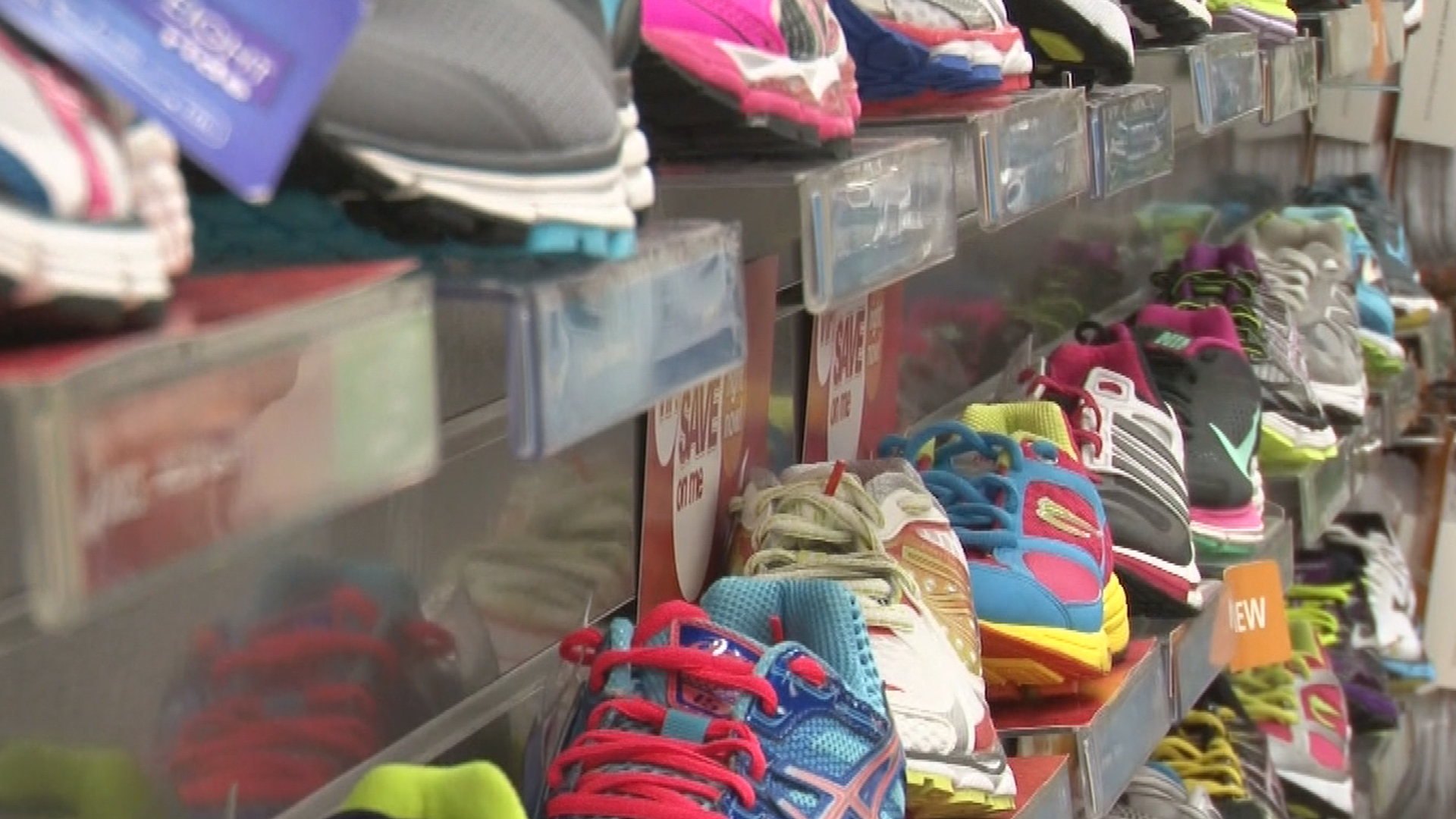
Ever notice how difficult it is to find the same running shoe twice?
A few months ago, I bought a great pair of Saucony running shoes. They were comfortable, light and made running feel a little less stressful. After they wore out, I returned to same store hoping to purchase another pair. Like many times before, they were discontinued. Each time you go shopping for a new pair of running shoes keep these four tips in mind on your quest for comfort and performance.
Room for Expansion
When we run, our feet swell. A proper running shoes need to give our feet some room to breathe and expand. One of the biggest mistakes runners make when purchasing a shoe is choosing one that is too tight or snug. After a few miles of jogging, a snug running shoe can turn into a tight and restrictive shoe. This can cramp your feet and put you out of action for weeks. Watch this video regarding fit of your running shoe.
The human foot and ankle is a complex mechanical structure containing 33 joints, 26 bones and more than a hundred muscles, tendons and ligaments. Physical therapists are experts in human movement. The structure and function of your foot is vital to recreational or competitive endurance sports. A physical therapy evaluation will examine not only your foot type but also identify area’s of imbalance (weakness/tightness) that may lead to injury or poor performance. Wear your running shoes to the evaluation for a full and accurate assessment.
Bring Your Orthotics
If you wear orthotics take them with you to the store when purchasing a new pair of shoes. An orthotic changes how your foot reacts to the ground. Take out the insoles of the sneaker, insert your orthotic and walk or run (if the store has a treadmill). This will provide a realistic fit and feel of the sneaker.
Replace and Rotate
Replacing your running shoes before they wear out is a good strategy to prevent injury. A good rule of thumb is to replace your running shoes around 300-400 miles. If you wear your running shoes for daily walking, keep in mind this will decrease the life of the shoe. Another good strategy is to have two pairs of shoes that you rotate. This will provide you with the sensation of a a newer shoe for a longer period of time.
Run in good health,
Jennifer B Jurewicz, DPT & Silas Carey, SPT
Click here to request and appointment for a running or foot & ankle evaluation.
Our physical therapists recommend the following stores and running groups:
We also support The Running Goddess in Katonah, Westchester, New York
Join the conversation